Beskrivelse
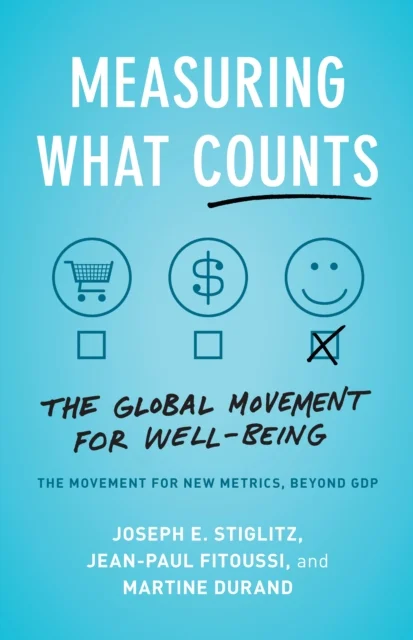
A bold agenda for a better way to assess societal well-being, by three of the world»s leading economists and statisticians «If we want to put people first, we have to know what matters to them, what improves their well-being, and how we can supply more of whatever that is.»—Joseph E. Stiglitz In 2009, a group of economists led by Nobel laureate Joseph E. Stiglitz, French economist Jean-Paul Fitoussi, and Nobel laureate Amartya Sen issued a report challenging gross domestic product (GDP) as a measure of progress and well-being. Published as Mismeasuring Our Lives by The New Press, the book sparked a global conversation about GDP and a major movement among scholars, policy makers, and activists to change the way we measure our economies.Now, in Measuring What Counts, Stiglitz, Fitoussi, and Martine Durand—summarizing the deliberations of a panel of experts on the measurement of economic performance and social progress hosted at the OECD, the international organization incorporating the most economically advanced countries—propose a new, «beyond GDP» agenda. This book provides an accessible overview of the last decade»s global movement, sparked by the original critique of GDP, and proposes a new «dashboard» of metrics to assess a society»s health, including measures of inequality and economic vulnerability, whether growth is environmentally sustainable, and how people feel about their lives. Essential reading for our time, it also serves as a guide for policy makers and others on how to use these new tools to fundamentally change the way we measure our lives—and to plot a radically new path forward.